Zimmer and the Neoclassic Car Brands
The Zimmer's rivals: the neoclassics of the 1960s to the 1980s, most of them American, new cars dressed as the Duesenbergs and Mercedes of the 1930s, from Brooks Stevens's Excalibur to the Clénet, the Stutz and the Florida makers, with the QuickSilver's very different rivals at the end.
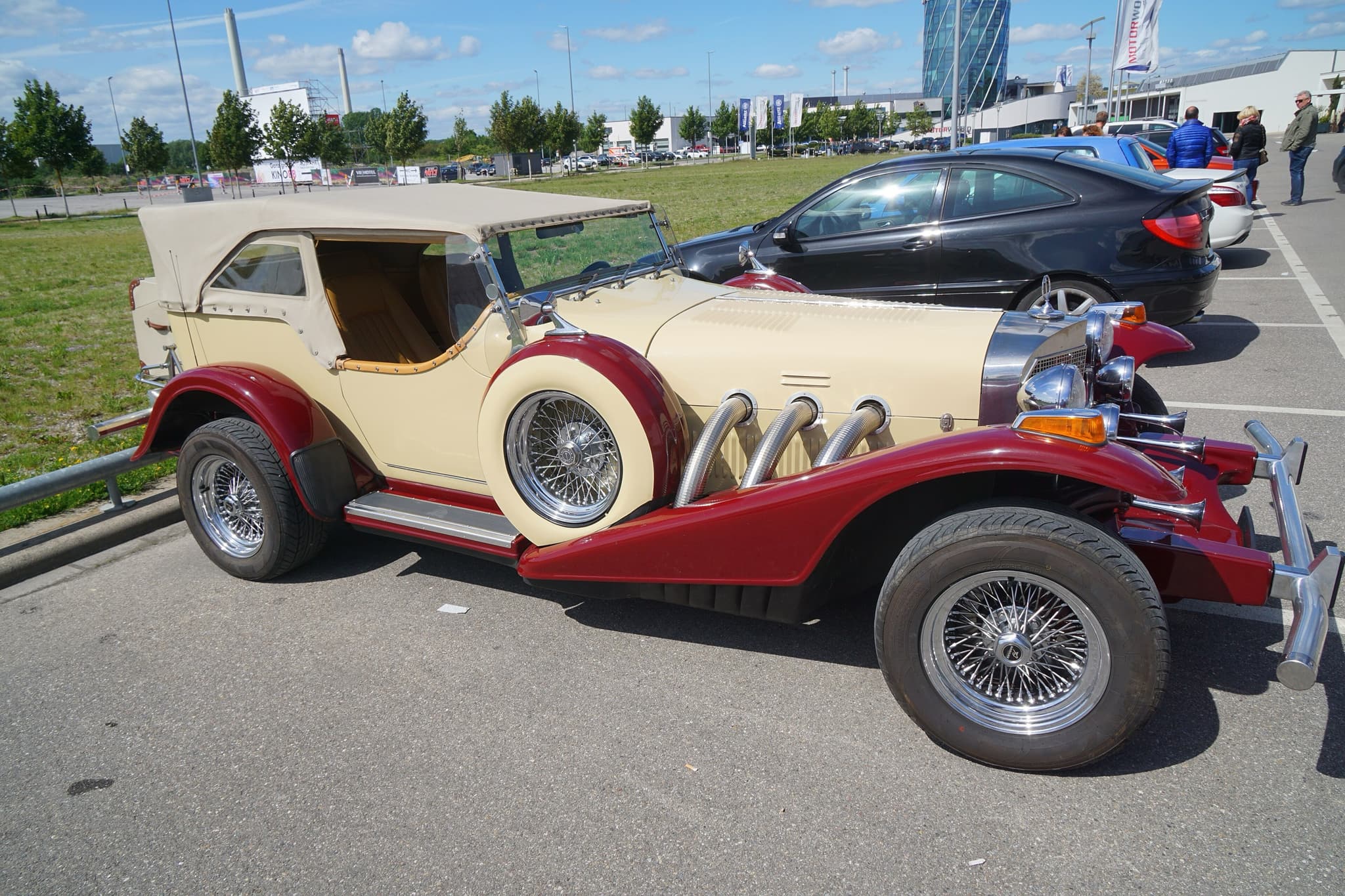
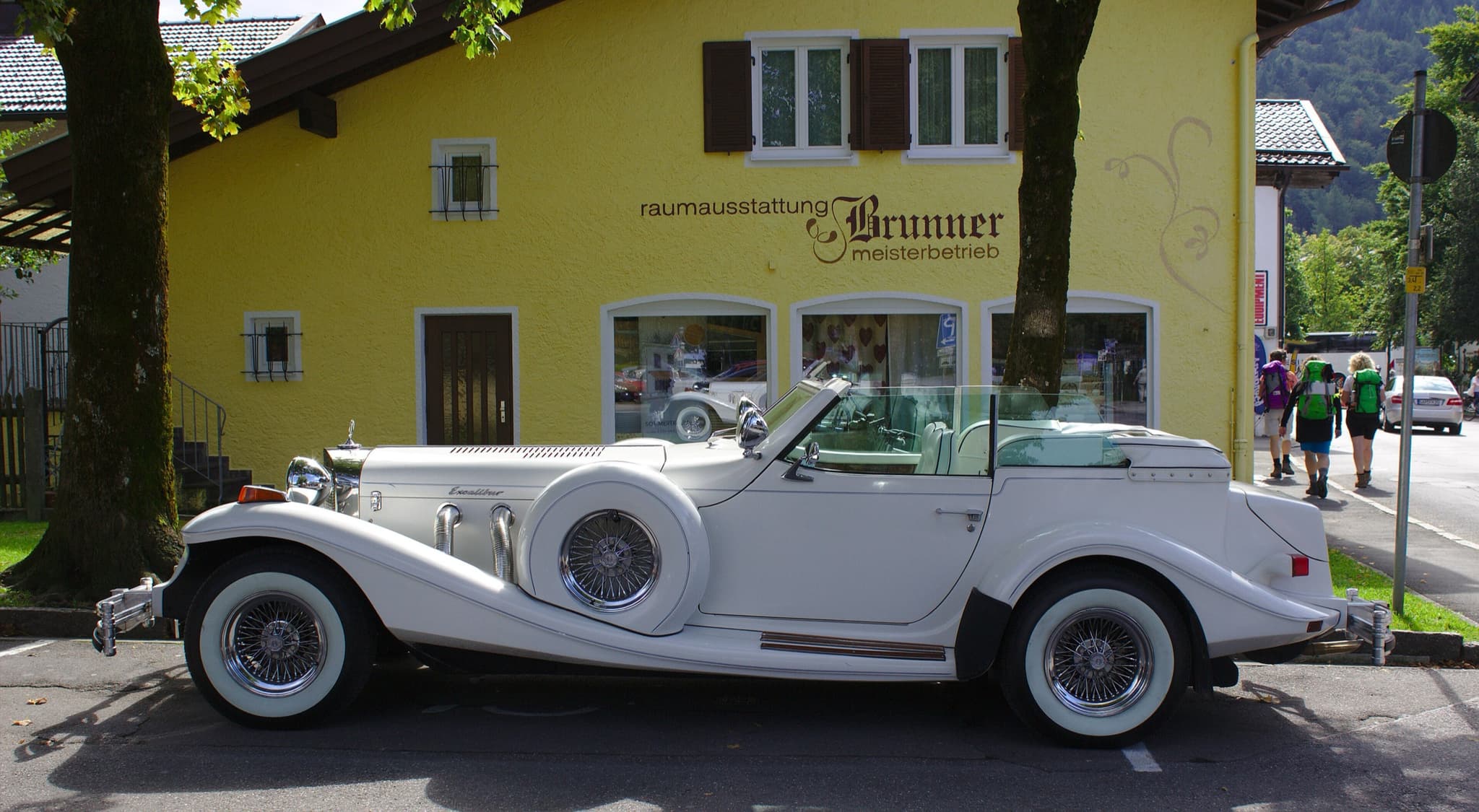
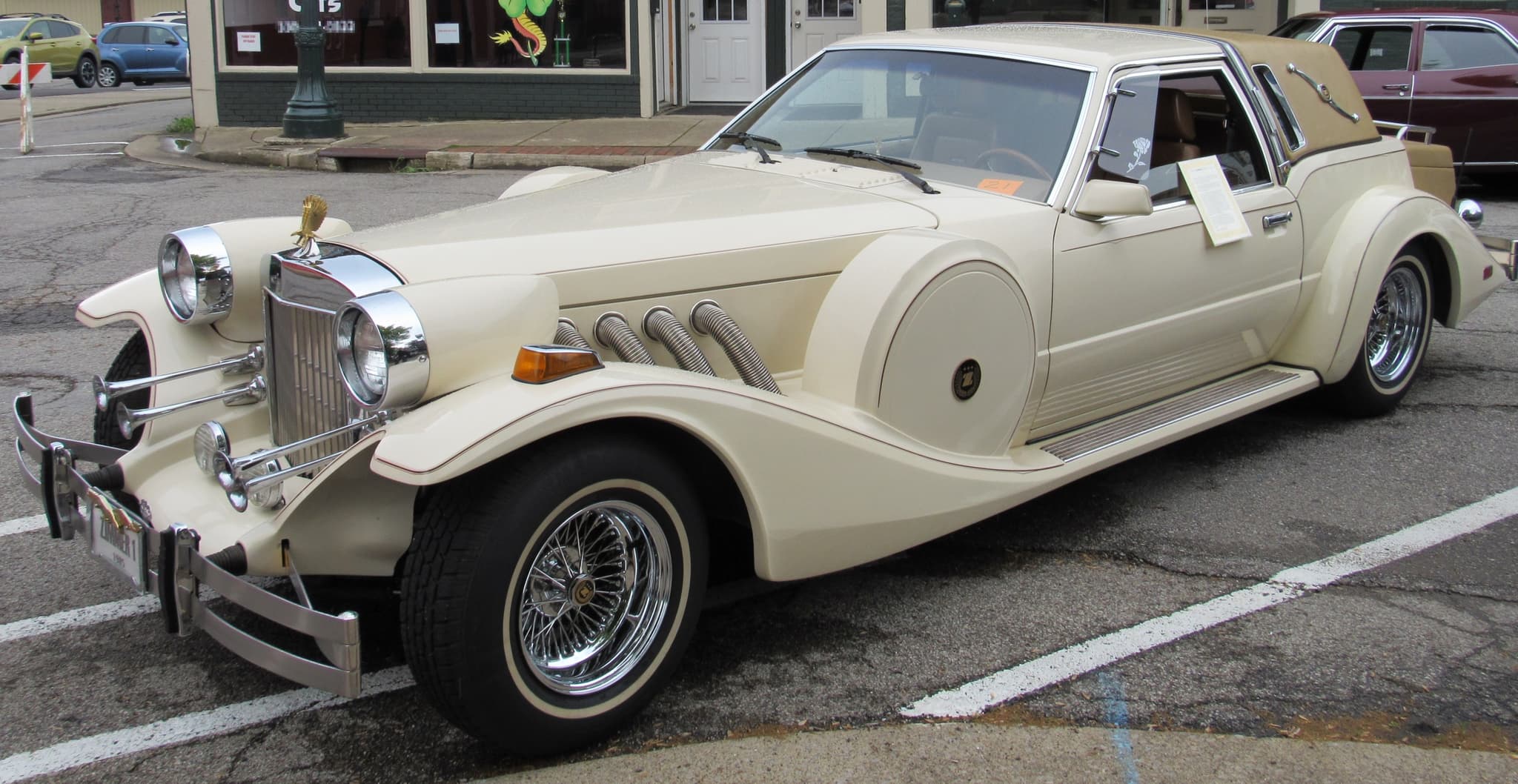
In 1964 Brooks Stevens, an industrial designer who worked for Studebaker, put a body in the style of a Mercedes SSK on a Studebaker chassis for the show circuit, and people asked to buy it. That was the Excalibur, and with it began a fashion that ran from the mid-1960s through the 1980s: new American cars dressed as the classics of the 1930s, with long bonnets (hoods), free-standing headlamps, outside exhausts and running boards, built on ordinary modern chassis and engines so that they could be driven and serviced like any other car. The Zimmer came late to it, and for a few years was among the biggest of the makers.source 1source 2
The neoclassic movement
The makers came in two kinds. Some built complete cars and sold them through dealers, as Excalibur, Clénet, Stutz, Zimmer and Phillips did; others sold bodies and kits for buyers to finish. Hagerty, looking back in 2014, summed up the buyers as "Hollywood elite, pop singers, pro athletes and anyone else craving the spotlight".
The early 1980s were hard on them. In July 1982 Automotive News surveyed nearly 300 firms in what it called the "Custom Market" and found them squeezed by recession and interest rates; one consultant expected "a good percentage of the specialty makers" to die. Zimmer was the exception. A Dania dealer already ranked it with Excalibur and Clénet as the top three in 1981, and in June 1982 Automotive News reported that, at its own rate, it had passed both. In 2012 the Antique Automobile Club of America opened its Second Generation class for collector cars, which made Excaliburs, Clénets and Zimmers eligible for its awards.source 1source 2source 3source 4source 5
Excalibur
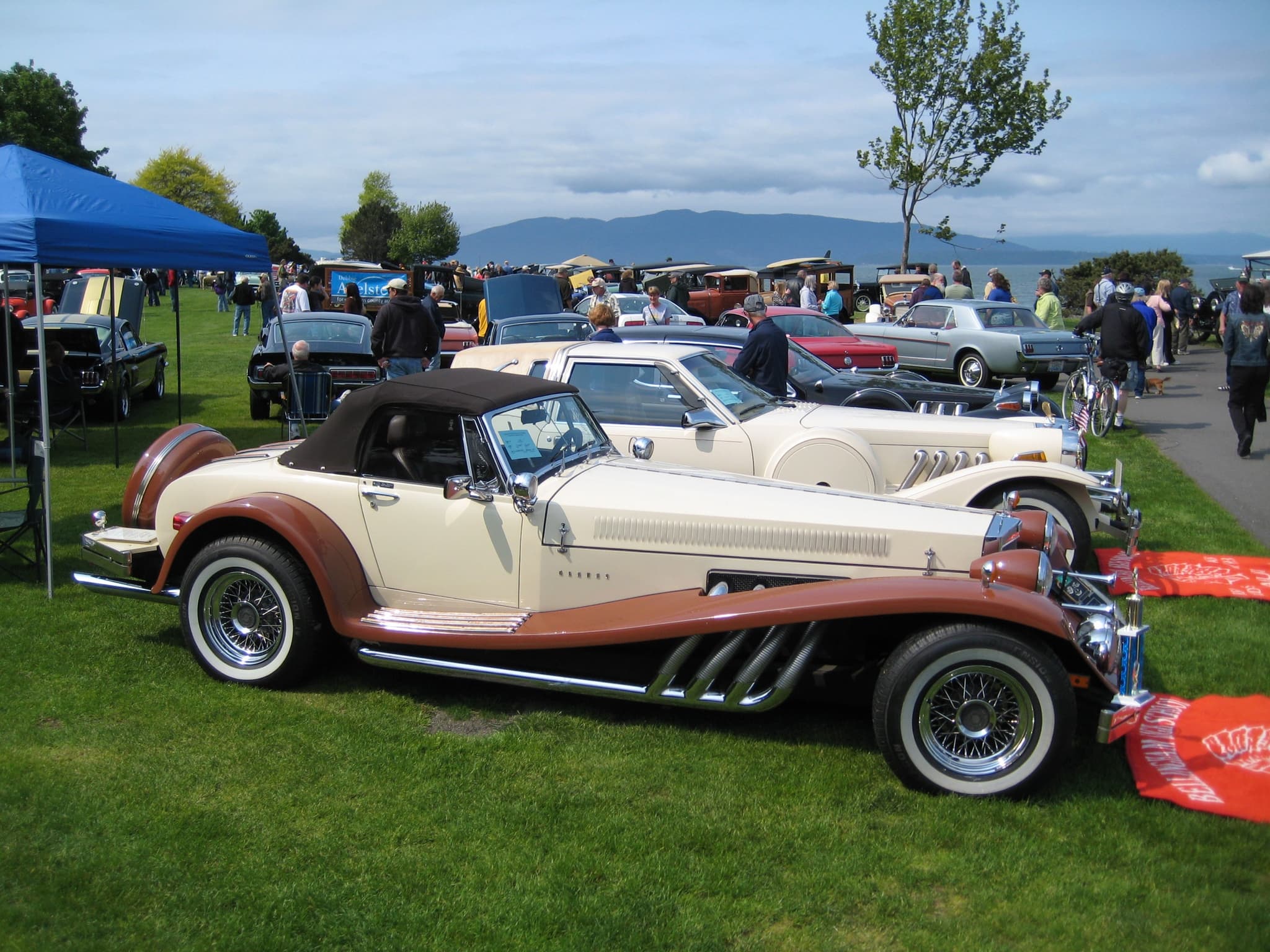
Stevens's company built Excaliburs in Milwaukee and later West Allis, Wisconsin, from 1964 or 1965 into the 1990s: at first on Studebakers, then on a frame of its own with Chevrolet V8s and Corvette suspension, always in fibreglass. Its prices rose from about $6,000 or $7,250 in 1965 (Automobile and Hagerty differ) to $29,000 for a Series III phaeton in 1979, and to $59,800 for the Series V phaeton and $62,800 for the roadster when the Series V came in, in June 1985. It built 367 cars in 1979, Hagerty wrote, and it told Automotive News it expected 250 in 1982; in 1985 it put its full production level at some 240 a year. The founder's family sold it in 1986, and it went through bankruptcy and a rescue led by its dealers. Its lifetime total is given as 3,268 by the holder of its factory records, though other accounts give more, and its end as 1995 or 1997.source 1source 2source 3source 6source 7
Clénet
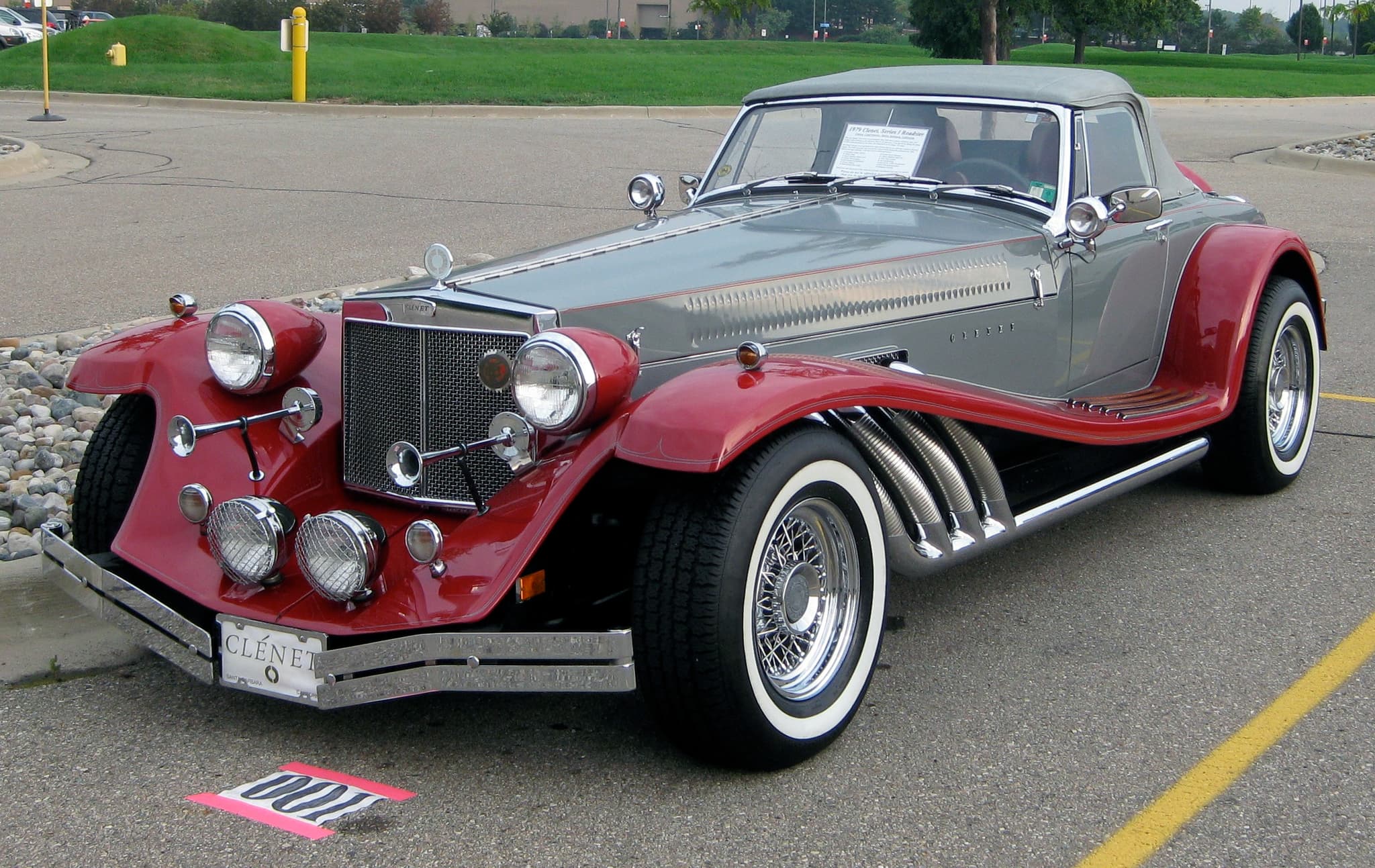
Alain Clénet, a French-trained designer who had worked for AMC, showed his first roadster at Los Angeles in 1976 and built it at Santa Barbara, then Goleta, California. What it was built on, the sources dispute: Automobile (2016) says new Lincoln Continental Mark V coupés with their frames shortened, Hagerty (2014) a Mercury Cougar chassis; both agree on an MG Midget's cabin. A Series I cost $27,000 or $27,500 in 1977 and over $65,000 by 1979, and the two-seat Series III Asha $78,500 at its launch in November 1981. In 1982 Automotive News called Clénets "$80,000-range cars", priced "well above its main competition, the Excalibur". The plant was padlocked in July 1982 after a quarrel with the company's backer, and the name passed to new owners. Rod Stewart, Wayne Newton and Ford's design chief Gene Bordinat had Clénets.source 1source 2source 8source 9source 10source 3
Stutz
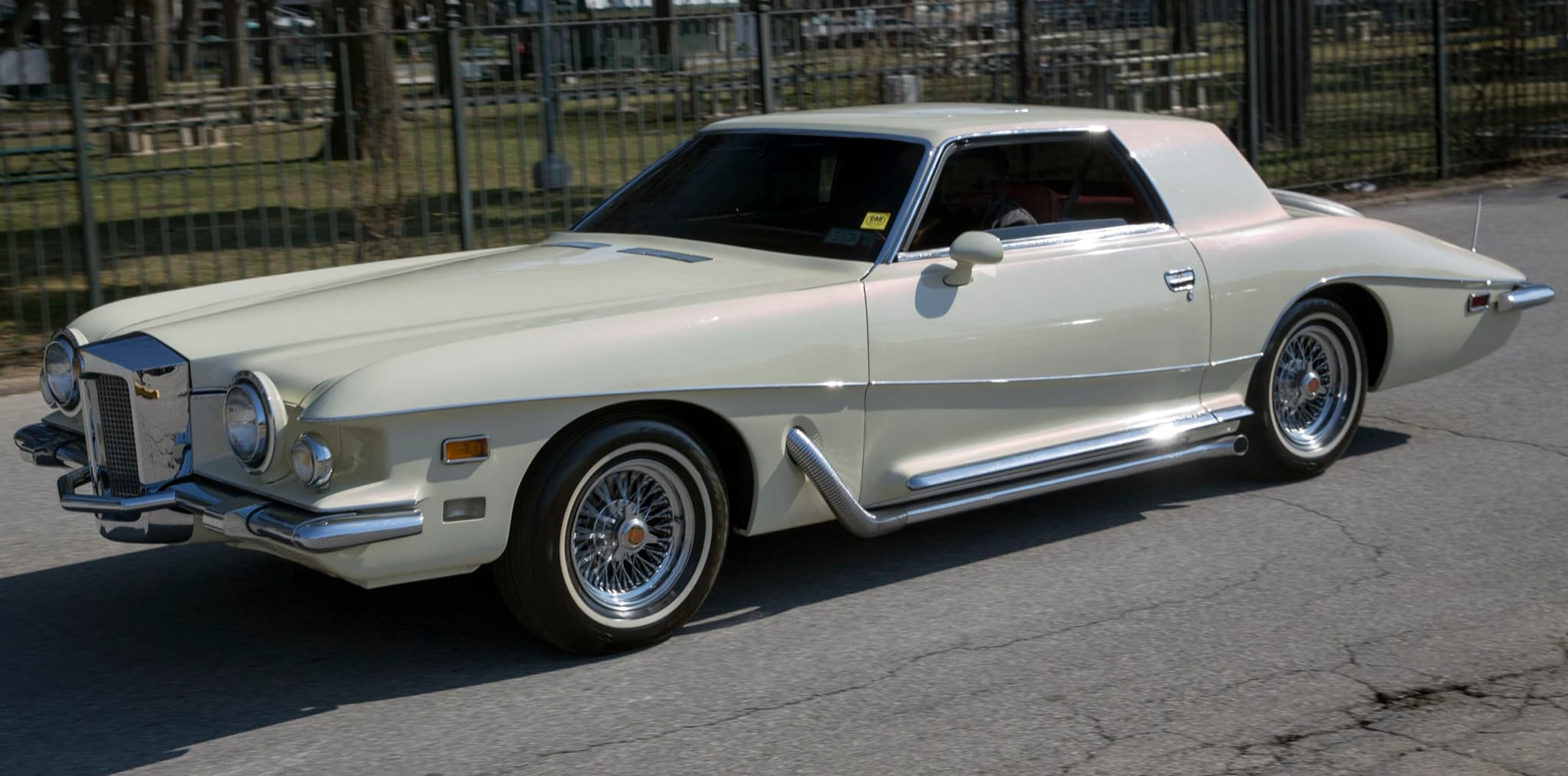
The revived Stutz of the 1970s was Virgil Exner's design: the Blackhawk, a coupé built from 1970 or 1971 on Pontiac Grand Prix and later General Motors running gear, with bodies built in Italy, and later a four-door, the IV-Porte. It was a car for celebrities: Elvis Presley, Automobile wrote, "outdueled Frank Sinatra for example No. 1". No price list of the time was read.source 2source 11
Classic Motor Carriages and Phillips
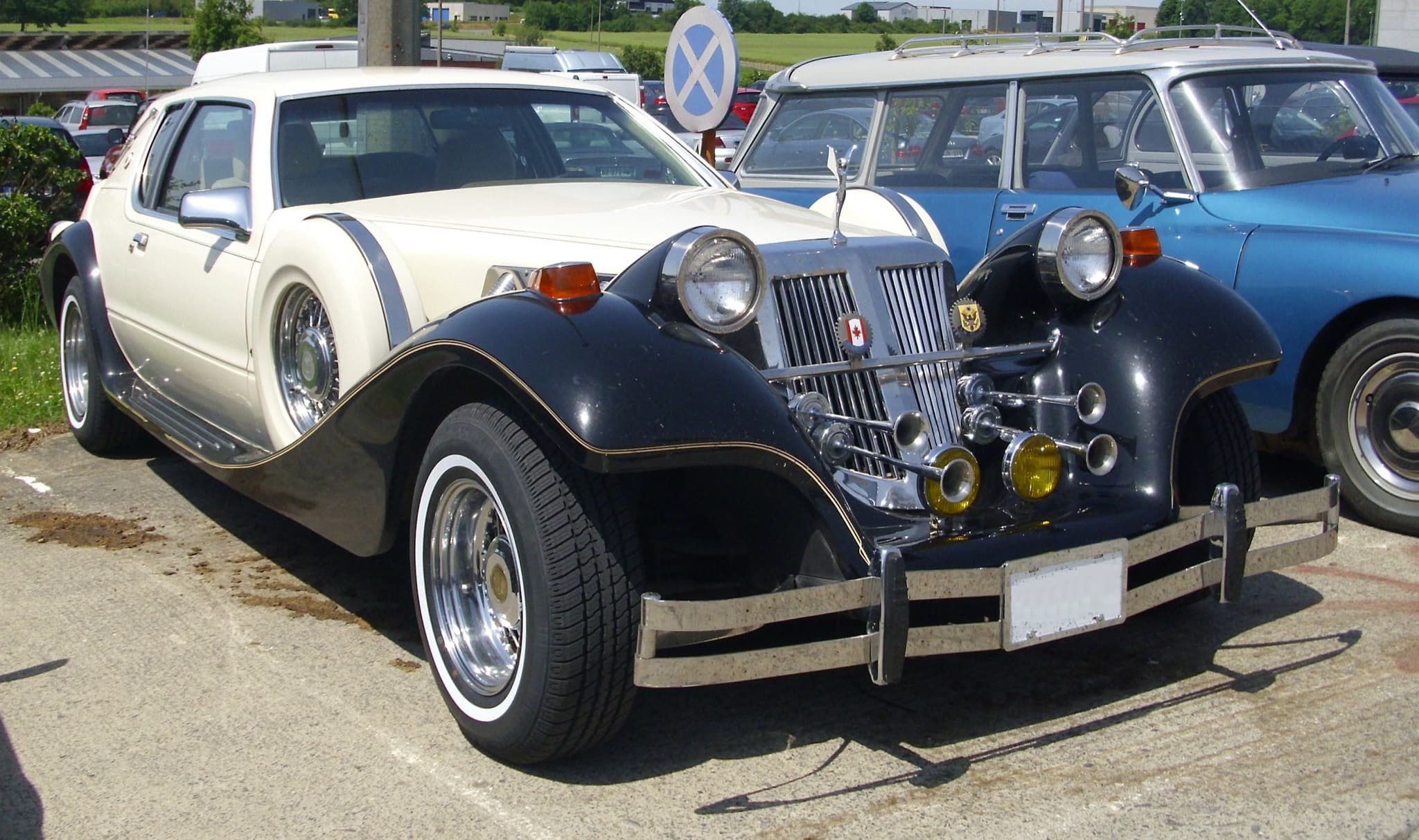
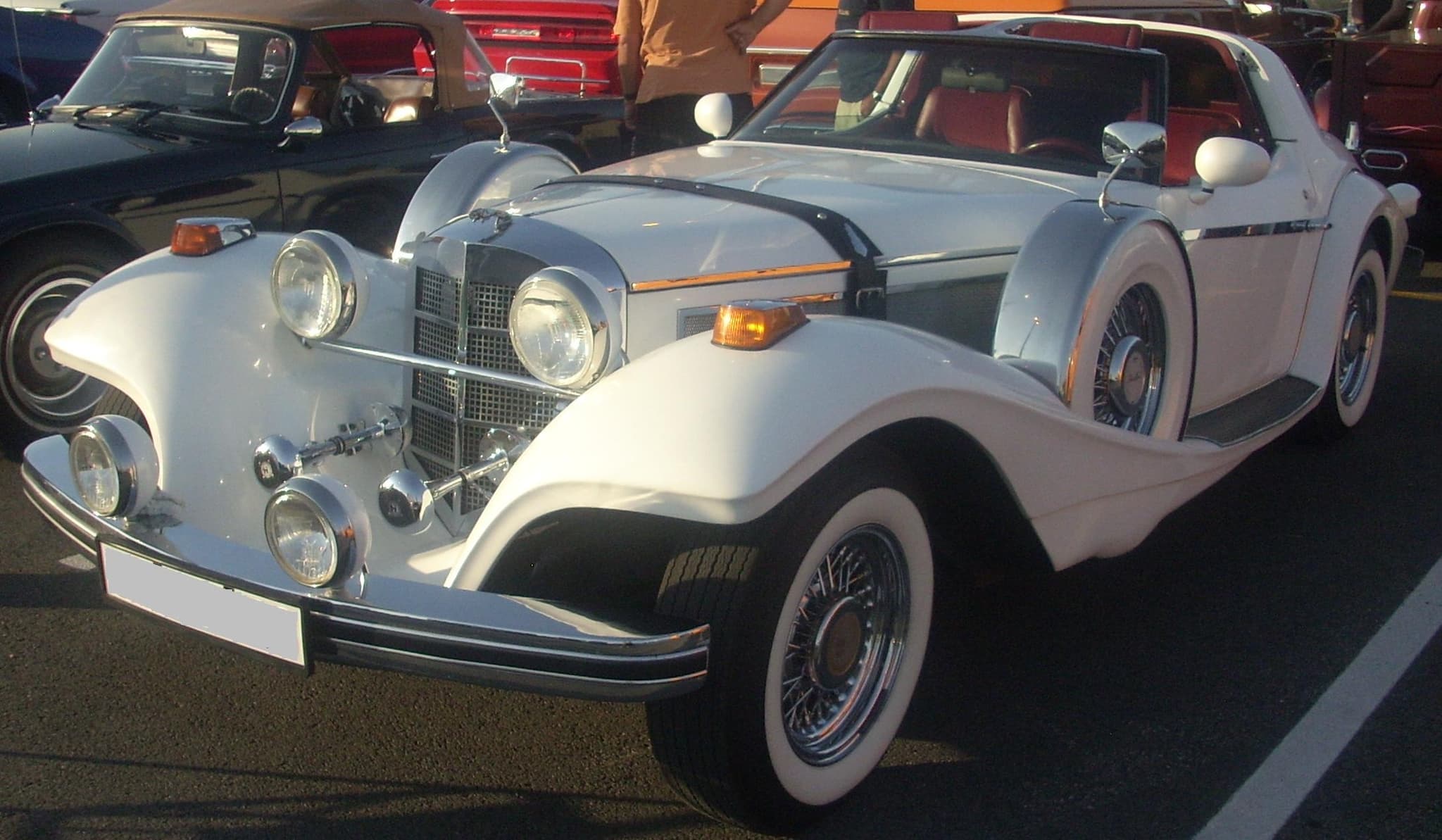
South Florida had more neoclassic makers than anywhere but California. Classic Motor Carriages of Miami made kits and replica bodies, and also the Classic Tiffany, a closed car that, Hagerty wrote, "applied the Zimmer formula but used the Mercury Cougar … instead of a Mustang"; it sold from $33,000. Automobile dates the Tiffany from 1982 and Hagerty from 1984, and its output is given variously; the Florida attorney general sued the company in 1994, and it shut in 1999. Of all the neoclassics it is the easiest to take for a Zimmer.
Phillips Motor Car Corp. built the Berlina in Pompano Beach itself, Zimmer's own town: a coupé in the style of the Mercedes 540K on a new Chevrolet Corvette, its frame lengthened by 559 mm (22 in), keeping the Corvette's windscreen (windshield) and T-top. Automotive News reported "Berlina Coupe No. 100" built in November 1981, with production to be limited to 250. A later encyclopedia called it a kit car; the 1981 report describes a hand-made one.source 1source 2source 12source 13source 14
Panther De Ville
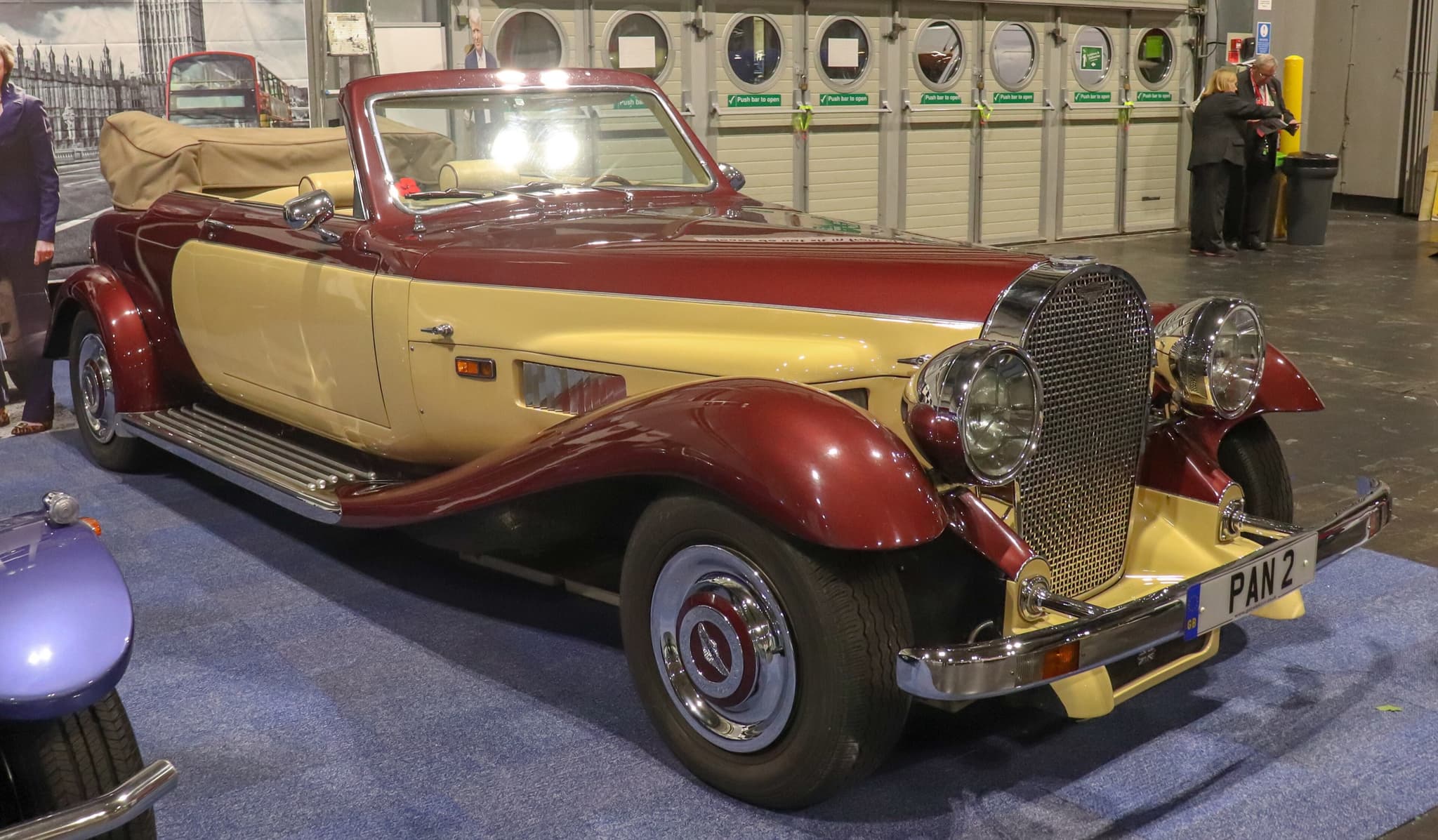
Britain had its own neoclassic: the Panther De Ville of 1974, a four-door saloon (sedan) on Jaguar running gear from Panther Westwinds of Surrey, of which about 60 were made. It is the car Cruella de Vil drives in Disney's 101 Dalmatians of 1996, and Notable Zimmers deals with the story that she drove a Zimmer.source 15source 16source 17
The smaller makers
Many more came and went. Among them were the Sceptre and the Gatsby in California, the Corsair kits of El Cajon, the MATCO Diamante on a Cadillac chassis, the Johnson Presidential roadster of Fort Lauderdale, and Elite Heritage Motors of Wisconsin, whose Duesenberg II replicas sold for "$100,000-and-up" in 1982, two years of orders ahead.source 18source 3source 1
Zimmer vs Excalibur
The two were tied from the start: Paul Zimmer told Forbes that the stir caused by an Excalibur roadster, which he bought for $22,000 in 1976, was what set him on the Golden Spirit. SFGate called them, in 2006, "the giants of the American neoclassic world".
| Zimmer Golden Spirit | Excalibur | |
|---|---|---|
| Years | Shown November 1980; built until May 1988 | From 1964 or 1965 into the 1990s |
| Built at | Pompano Beach, Florida | Milwaukee, then West Allis, Wisconsin |
| Begun by | Paul H. Zimmer, a maker of mobile homes | Brooks Stevens, an industrial designer |
| Underneath | A new Ford Mustang, stretched, its roof, doors and cabin kept | Excalibur's own frame after the first Studebakers; Chevrolet V8, Corvette suspension |
| Bodies | Coupé, convertible, four-door; fibreglass on the Mustang's steel cabin | Roadster and phaeton, later saloons; fibreglass |
| List prices | $55,900 in March 1981 to $71,950 in December 1986 | $29,000 for the 1979 phaeton; $59,800 and $62,800 for the Series V of 1985 |
| Output | About 1,250, by this site's estimate | 3,268 by the holder of its factory records; other accounts give more |
| End | The parent's Chapter 11 of 10 May 1988 | Sold in 1986; bankruptcies and a dealers' rescue |
Zimmer vs Mitsuoka Le-Seyde
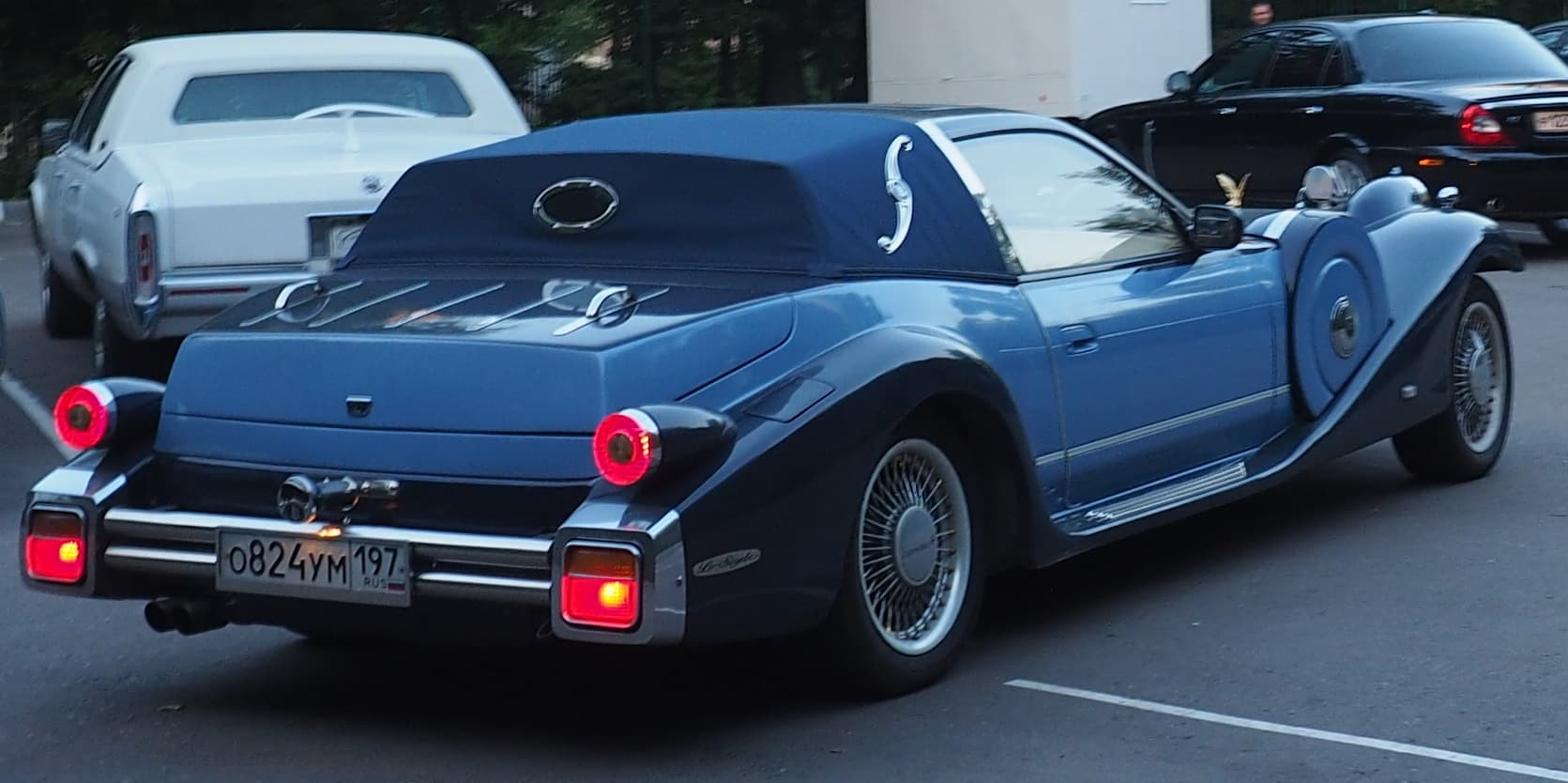
The Japanese Mitsuoka Le-Seyde, a two-door of about 1990 on a Nissan Silvia with a lengthened nose, looks so much like a small Golden Spirit that Curbside Classic in 2011 headed its piece "The Compact Zimmer", and Hagerty UK in 2023 thought it "perhaps influenced as much by Zimmer as any pre-war cars". That is the writers' opinion: no statement by Mitsuoka naming the Zimmer has been found, and the resemblance is all that links them.source 22source 23
The QuickSilver's rivals
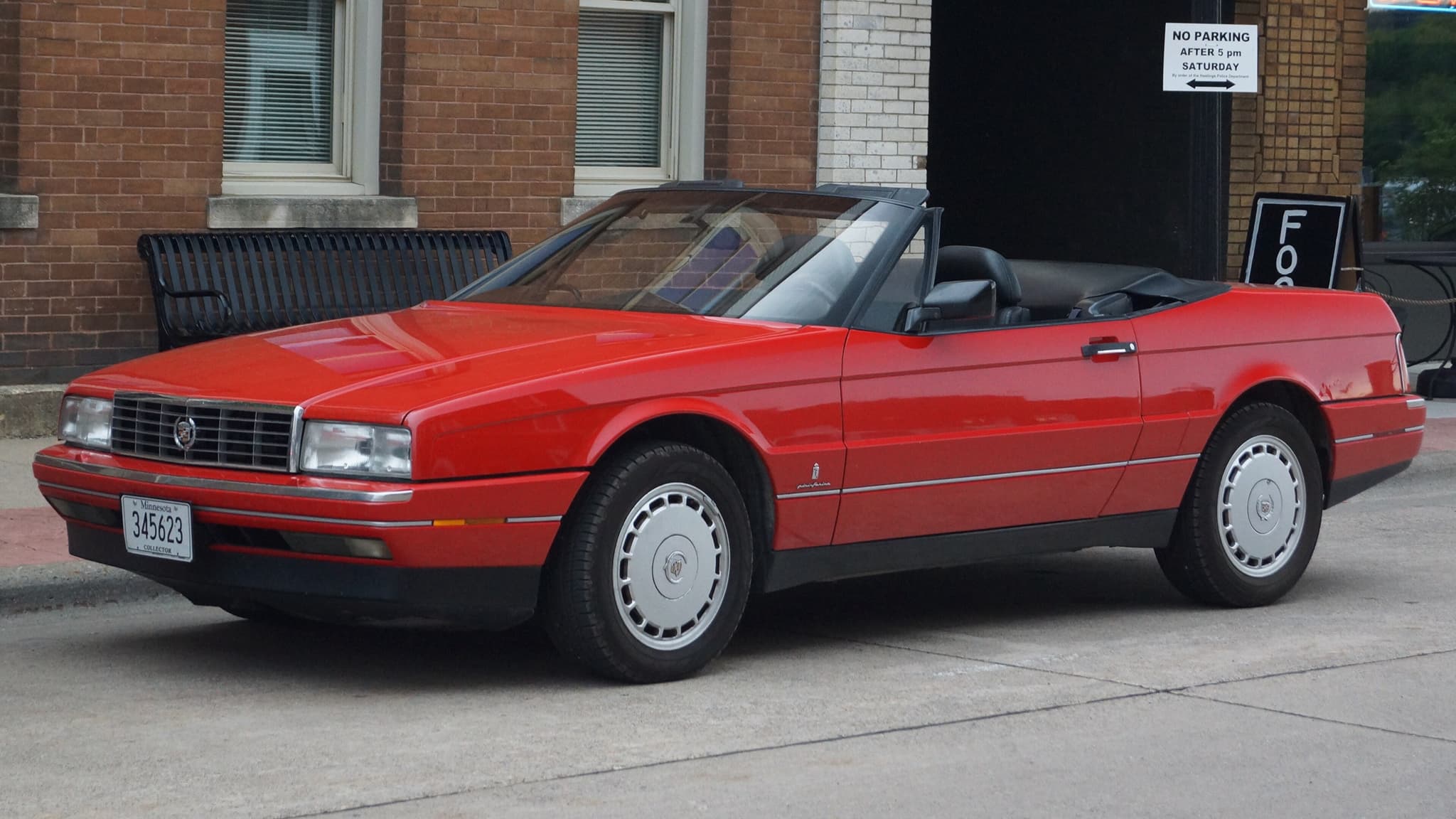
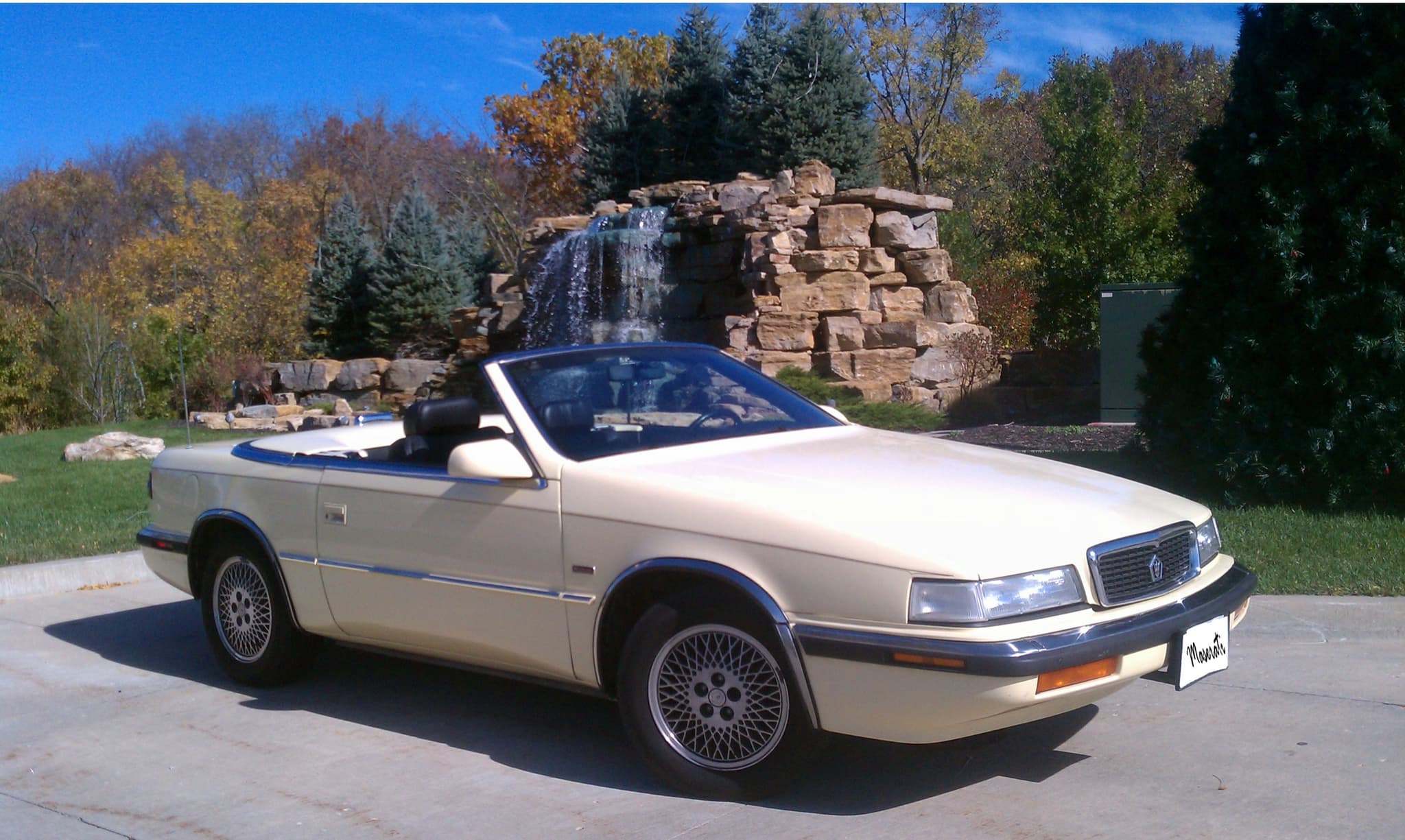
The QuickSilver was not set against neoclassics at all. Venture, in July 1986, put it among the two-seaters from Fiat, Jaguar, Porsche and Mercedes-Benz, and above all against the two that Detroit was about to launch: Cadillac's Allanté, announced at $45,000, and Chrysler's two-seater built with Maserati, at nearly $30,000. The first Allantés left the line in January 1987 at $54,700; Chrysler's TC by Maserati reached the market only in 1989, after the QuickSilver had gone, at about $33,000. Zimmer preferred to compare its car with the two-seat Thunderbird of the 1950s, and Cadillac's Charles Gibson told Venture why the big makers stayed out of so small a market: "We can't afford to go into a market smaller than 2,000 cars. It's not economical for us."source 24source 25source 26source 27source 28source 20source 29
Sources
Sources are given as plain text; their addresses are on the sources page.
- Primarymade at the time, by the maker or by people who were there
- Referenceserious later work: clubs, specialists, magazines, books
- Uncheckedencyclopaedias and enthusiast sites: cited beside a good source, named in the sentence, or marked Unchecked
- Jim Koscs, "All that Glitters is probably Fiberglass", Hagerty, 23 Oct 2014, the movement and its makers; the movement, the buyers and the AACA; Excalibur section; Clenet section; the Classic Tiffany; the smaller makers. Reference
- Ronald Ahrens, "Standing on their own", with the sidebar "Neoclassic movers and soakers", Automobile, Jan 2016, vol. 30 no. 10, pp. 65–70, pp. 65–70; pp. 65–70, the movement and the sidebar; the sidebar, Excalibur; pp. 69–70, Clénet; the sidebar, Stutz; the sidebar, Classic Motor Carriages. Reference
- Jim Plegue, "Survival is tougher", Automotive News (Crain Communications), via Internet Archive, 26 Jul 1982, Custom Market section, pp. E-1, E-11, the Custom Market survey; the sales table: Excalibur; the sales table: Clénet; Elite Heritage Motors' Duesenberg II. Primary
- Kathleen Hamilton, "Zimmer's flashy cars swimming in almost-dry market", Automotive News (Crain Communications), via Internet Archive, 28 Jun 1982, p. 3, p. 3, "surpassed". Primary
- Michael Langberg, "Zimmer has 'Golden Spirit'", Fort Lauderdale News and Sun-Sentinel, 22 Mar 1981 (Sunday), p. 3F, p. 3F, the Dania dealer's top three; p. 3F, the price in March 1981. Primary
- Automotive News (Crain Communications), via Internet Archive, "Excalibur introduces Series V", Jun 1985 (the 10 or 17 June issue), the Series V prices. Primary
- Richard Johnson, "Rescue of Excalibur may come from dealer", Automotive News (Crain Communications), via Internet Archive, 23 Dec 1985, pp. 24–26, the rate, the staff and the rescue; the rescue. Primary
- Automotive News (Crain Communications), via Internet Archive, "Two-seat Asha bows: Clenet's third series", 30 Nov 1981, p. 3, p. 3, the Asha. Primary
- Automotive News (Crain Communications), via Internet Archive, "Clenet evicted, vows he'll come back", 9 Aug 1982, p. 3, p. 3, the eviction; against the Excalibur. Primary
- Matt DeLorenzo, Item on a planned lower-priced Clénet ("lower-priced Clenet model"), Automotive News (Crain Communications), via Internet Archive, 4 Mar 1985, the Clénet of 1985. Primary
- Curbside Classic, "It's True You Can't Go Home" (Stutz history), by May 2014 (Wayback capture of 2 May 2014), Exner and the Stutz revival. Reference
- Automotive News (Crain Communications), via Internet Archive, "Milestone Berlina Coupe", 7 Dec 1981, p. 3, p. 3, "Milestone Berlina Coupe". Primary
- Mike Lawrence, A to Z of Sports Cars 1945–1990, Bay View, 1996 printing, 1991, the Phillips entry. Reference
- Fitzroy Dearborn, The Beaulieu Encyclopedia of the Automobile, 2000, the Phillips entry. Reference
- Martin Buckley, Cars of the Super Rich, Motorbooks, 2004, the Panther De Ville. Reference
- Fid Backhouse, 501 Must-Drive Cars, Bounty, 2011, the Panther De Ville. Reference
- Ezra Dyer, "Neoclassic cars -- big, head-turning fakes", SFGate, 19 Nov 2006, the Cruella car; "the giants"; the Excalibur rights. Reference
- Bruno Vijverman, "Break On Through to the Other Side", Driven To Write, 26 Aug 2024, the makers, one by one. Reference
- Anne Bagamery, "The egomobile", Forbes, 26 Sep 1983, pp. 90–94, the Excalibur bought in 1976. Primary
- Zimmer Motor Cars Corp., Pompano Beach, Florida, 1987 press kit (Golden Spirit and QuickSilver), covering letter of 31 Jul 1987; price list of 1 Dec 1986, price list of 1 December 1986; release "Zimmer intro's 1987 QuickSilver": the Thunderbird. Primary
- Ed Lopez, Report on Zimmer Corporation's Chapter 11 filing, Miami Herald, 11 May 1988, the filing of 10 May 1988. Primary
- Antony Ingram, "Express yourself, with this Zimmer Golden Spirit", Hagerty UK, 13 Mar 2023, the Mitsuoka. Reference
- Curbside Classic, "Mitsuoka Le Seyde: The Compact Zimmer", 17 Oct 2011, "The Compact Zimmer". Unchecked
- Jack Hayes, "Ostentatious — and priced accordingly", Venture, Jul 1986, the rivals and their prices; Charles Gibson. Primary
- Michelle Krebs, "First Allante rolls off line at $54,700", Automotive News (Crain Communications), via Internet Archive, 19 Jan 1987, the first Allanté. Primary
- G. N. Georgano, Cars of the Seventies and Eighties, Mason Crest, 2002, the Allanté's price. Reference
- James M. Flammang, The Great Book of Dream Cars, Publications International, 1990, the TC by Maserati. Reference
- Richard M. Langworth, Illustrated Chrysler Buyer's Guide, Motorbooks, 1996, ch. 29, the TC by Maserati. Reference
- Patrick Bedard, "QuickSilver!", Car and Driver, Apr 1987, vol. 32, pp. 36–40, Counterpoint. Primary